If you've spent any time reading ingredient lists over the past few years, you've seen it: Centella Asiatica, also labelled as gotu kola, cica, or tiger grass. It shows up in ampoules, creams, masks, even lip balm. That's not a marketing trend — it's one of the few skincare ingredients with decades of real clinical use behind it, first in wound care, now in everyday routines.
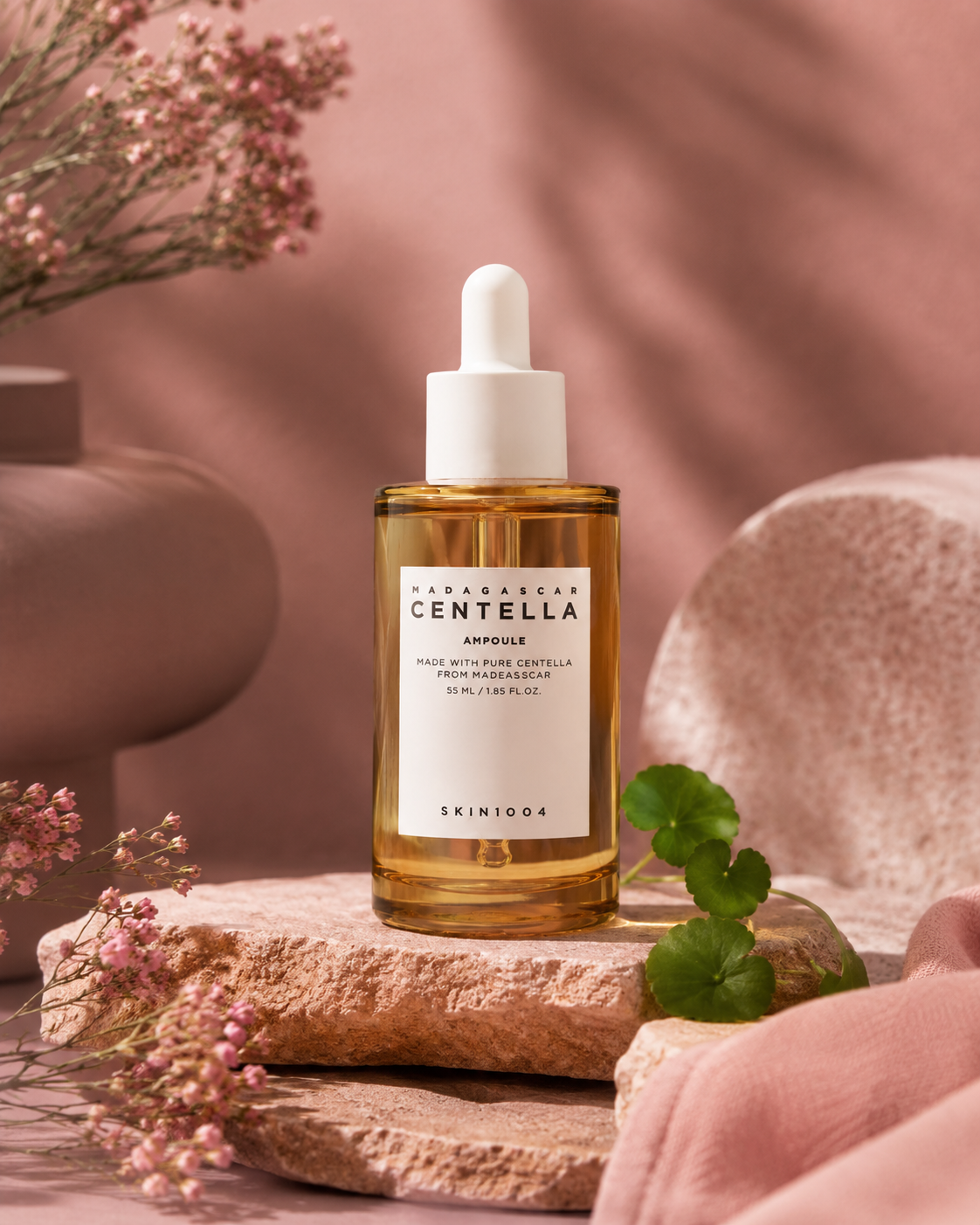
We built our own Centella ampoule around this ingredient specifically because of how it behaves on compromised skin: barrier damage from over-exfoliating, redness from weather or fragrance, the dull, tight feeling that shows up after a bad skincare week. This is what's actually happening when it works.
What centella actually does
Centella Asiatica contains a group of compounds called triterpenoids — mainly asiaticoside, madecassoside, asiatic acid, and madecassic acid. These aren't filler ingredients; they're the reason the plant has been used in wound-healing contexts for a very long time. On skin, they do three specific things:
- Calm visible redness. Centella has a measurable soothing effect on irritated, reactive skin, which is why it's become a staple for anyone dealing with sensitivity or a compromised barrier.
- Support barrier repair. It encourages collagen synthesis at the site of application, which matters most when your skin barrier is already thin or damaged.
- Provide antioxidant protection. Ongoing exposure to pollution and UV stresses skin at a cellular level; centella's antioxidant activity helps offset some of that load.
None of this means centella is a cure-all. It won't undo sun damage or replace retinoids for texture and fine lines. What it does well is calm skin down and support it while it heals — which is exactly the job it has in our own ampoule.
Who should actually use it
Centella is one of the rare ingredients with almost no downside for sensitive or reactive skin. If your skin flushes easily, reacts to new products, or feels tight and uncomfortable more often than not, it's a reasonable place to start rebuilding a routine. It also pairs well underneath actives like vitamin C or retinoids, which is why we formulate our ampoule to sit early in a routine, not as an occasional treatment.
"The best ingredient for irritated skin isn't the one that does the most — it's the one that calms things down enough for everything else to work." That's the whole logic behind formulating with centella as a base rather than a headline.
How to actually use a centella ampoule
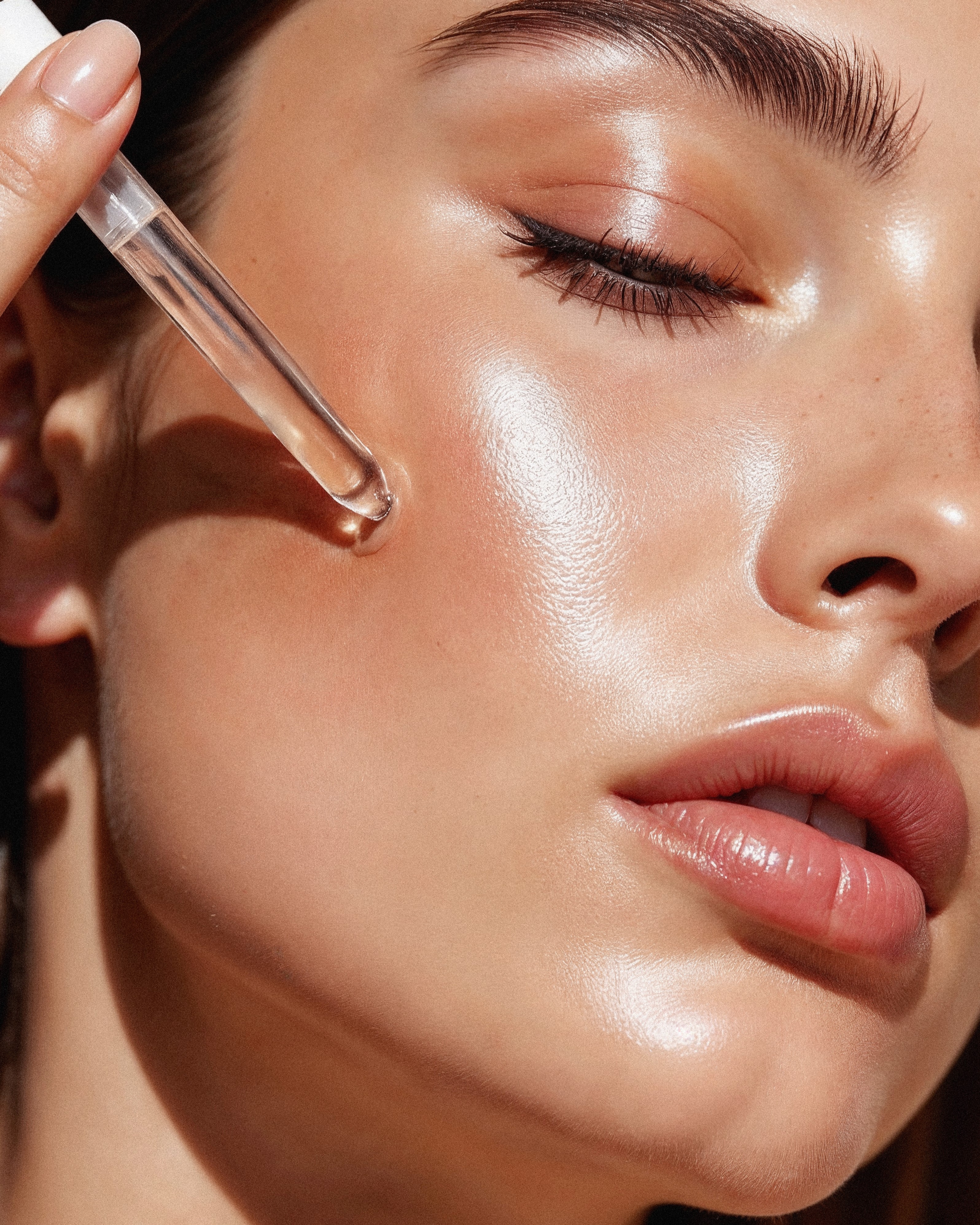
Ampoules are concentrated, so a little goes further than it looks like it should. After cleansing and toning, press 2–3 drops between your palms and pat directly into skin rather than rubbing — pressing helps the product absorb rather than sitting on the surface. Follow with a moisturiser to lock it in. Centella is gentle enough for both morning and evening use, and unlike actives such as retinol or vitamin C, it doesn't carry sun-sensitivity warnings.
What to expect, and when
Most people notice calmer, less reactive skin within one to two weeks of consistent use. The barrier-repair and glow effects — the part where skin starts looking genuinely healthier rather than just less irritated — tend to build over four to six weeks. Skincare that works quietly in the background rather than delivering an overnight transformation is usually the kind that's actually doing something structural, not just temporarily plumping the surface.
Centella compared to other soothing ingredients
Aloe, oat extract, and panthenol all get grouped into the same "calming ingredient" category as centella, but they're not solving the same problem. Aloe and panthenol are mostly surface-level hydrators — they make irritated skin feel more comfortable in the moment without doing much for the barrier underneath. Centella is the one with actual repair mechanisms attached to it: it's supporting collagen synthesis and barrier structure, not just soothing the surface sensation of irritation.
That doesn't make the others useless. A product combining centella with panthenol, for instance, is addressing both the immediate discomfort and the underlying repair at once, which is why you'll often see the two paired in the same formula rather than treated as competitors.
Common questions
Can you use too much centella? Not really — it's one of the few actives without a meaningful ceiling on frequency. Twice-daily use is standard, and there's no cycling or "skin needs a break" logic that applies here the way it does with retinoids or acids.
Does it work on active breakouts, not just redness from irritation? To a degree. Centella calms the inflammation around a breakout, which can make it look less angry, but it isn't an acne treatment on its own — it won't clear the underlying cause the way salicylic acid or benzoyl peroxide would. Think of it as damage control alongside an actual acne routine, not a replacement for one.
Is "cica" the same thing? Yes — cica is simply the shorthand that stuck in Korean skincare marketing. Centella Asiatica, gotu kola, and cica all refer to the same plant and the same active compounds; if a label uses one term over another, it's a branding choice, not a different ingredient.
Layering it with actives that usually cause irritation
This is where centella earns its place in a routine rather than just being a nice-to-have. Retinoids and exfoliating acids both work by creating a controlled amount of irritation — that's the mechanism, not a side effect to eliminate. Centella applied either just before or just after those actives doesn't cancel out their effect, but it does reduce the accompanying redness and flaking enough that most people can tolerate a stronger routine than they otherwise could.
A simple way to test this: if you've had to stop using a retinol because your skin couldn't handle it, try reintroducing it at the same strength with a centella ampoule underneath. It's often the difference between a product you have to abandon and one you can actually keep using.
If you're new to centella, our Centella Ampoule is the simplest starting point — one ingredient category, formulated to be layered under anything else already in your routine.