Of everything in a skincare routine, sunscreen has the strongest and most consistent evidence behind it. It's also the step people skip most often — on cloudy days, indoors, in winter — which is precisely when UV exposure is easiest to underestimate.
What SPF actually protects against
UV exposure is the leading external cause of premature skin ageing: fine lines, uneven tone, loss of firmness — most of what people spend the rest of their routine trying to treat. Every other active in your routine, from vitamin C to retinol, is working against a baseline of damage that unprotected sun exposure keeps adding to. Skip SPF and you're not neutral, you're actively losing ground.
Chemical vs mineral filters
Chemical filters absorb UV and convert it to heat; they tend to feel lighter and sit better under makeup. Mineral filters (zinc oxide, titanium dioxide) sit on the skin's surface and reflect UV away; they're the better choice for reactive or acne-prone skin since they're less likely to trigger irritation. Neither is objectively superior — the best sunscreen is the one you'll actually reapply.
The best SPF isn't the highest number on the shelf. It's the one you'll actually put on every single day, rain or shine, indoors or out.
How much, and how often
Most people apply roughly half the amount needed for the SPF number on the bottle to be accurate — a nickel-sized amount for the face is the usual benchmark. Reapplication every two hours during direct sun exposure matters more than the SPF number itself; SPF 50 applied once at 8am has mostly worn off by early afternoon.
Does SPF matter indoors?
UVA rays, the ones responsible for long-term ageing rather than sunburn, pass through window glass. If you spend most of the day near a window or under artificial light near daylight-facing windows, that exposure adds up over months even without a single visible burn.
The excuses, and why they don't hold up
"It's cloudy today." Up to 80% of UV rays pass through cloud cover. A grey sky cuts visible brightness, not UV exposure — this is exactly how people end up with sun damage on days they never felt like they were "in the sun."
"I have darker skin, I don't burn." More melanin does offer some natural UV protection, but it isn't immunity. Hyperpigmentation and uneven tone from UV exposure show up on every skin tone, and skin cancer risk, while statistically lower, is not zero. The advice doesn't change based on how visibly you burn.
"My moisturiser already has SPF in it." Most people apply moisturiser far more thinly than the amount needed to hit the SPF rating on the label — the number on the jar assumes a specific, generous quantity that a normal moisturising routine doesn't deliver. Treat SPF-in-moisturiser as a bonus, not your actual sun protection step.
"I'm only going to be outside for a few minutes." UV damage is cumulative across a day, a week, a year — not reset by how short any single outdoor trip is. Those few minutes add up the same way ten separate five-minute exposures do.
Sunscreen and makeup
Reapplying sunscreen over a full face of makeup is the part most people quietly skip, because rubbing in another layer of cream sunscreen ruins the makeup underneath. A setting-powder SPF or a fine-mist sunscreen spray is the practical fix — neither disturbs makeup the way a cream reapplication does, and both are worth keeping in a bag specifically for midday top-ups.
Does SPF expire?
Yes, and this one actually matters. Most sunscreen is rated for about three years unopened, but once opened, exposure to air and repeated temperature changes (a bottle left in a hot car, for instance) degrade the active filters faster than the shelf date suggests. If a sunscreen has changed in texture, smell, or colour, or you genuinely can't remember when you opened it, replace it — an expired sunscreen isn't providing the protection its label promises.
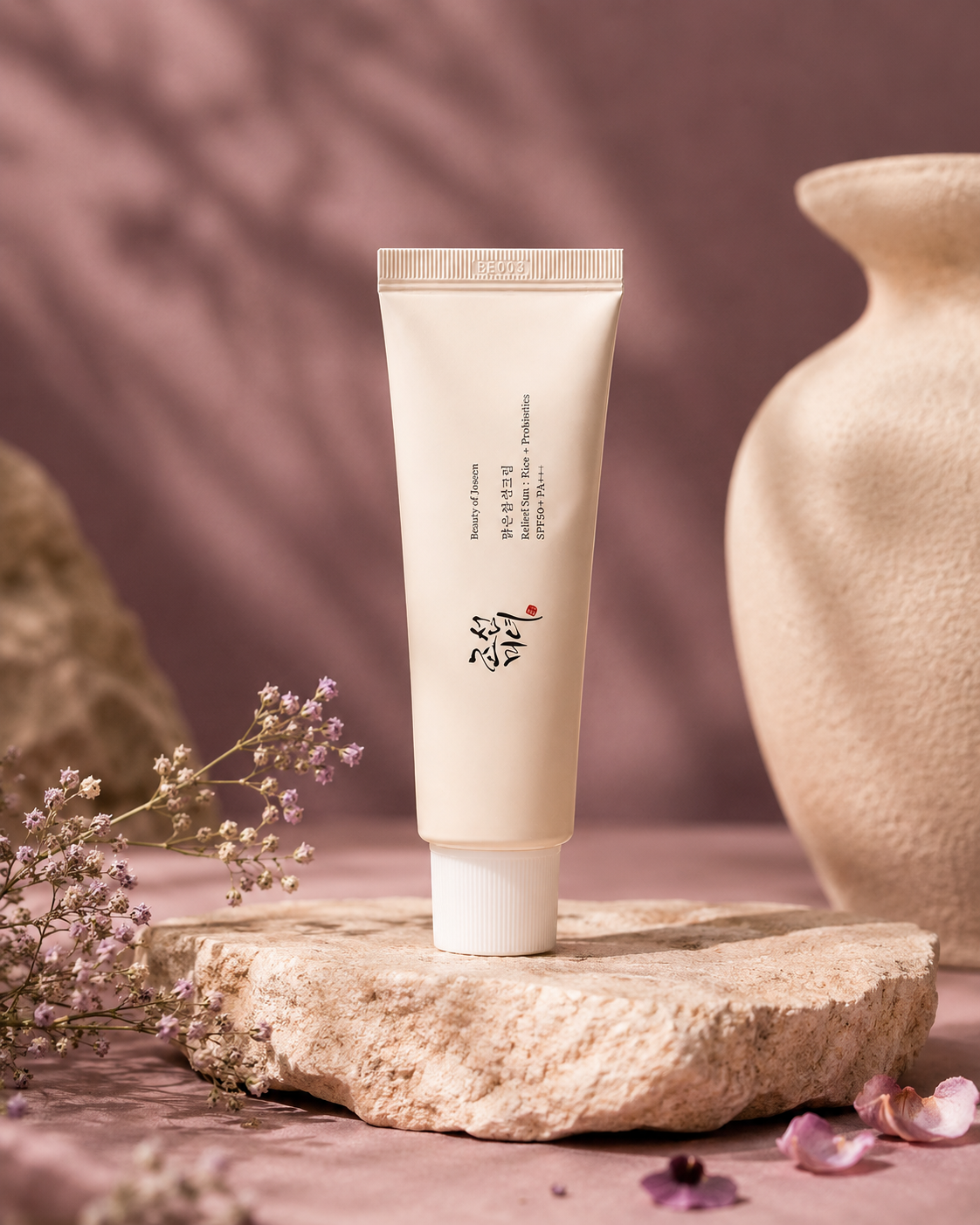
Our Relief Sun and Centella Sun Cream are both broad-spectrum SPF 50+ formulas built to sit comfortably under makeup for exactly this reason — the best sunscreen only works if you actually want to wear it every day.
SPF and other actives in the same routine
Retinoids and exfoliating acids both increase how easily skin burns and how visible any resulting damage becomes, which makes SPF less optional, not more, on days you're using them — this is the actual reason retinol is typically recommended at night: not because it stops working in daylight, but because pairing it with unprotected daytime sun exposure compounds the irritation both are already causing. If you use a retinoid or acid at night, treat the next morning's SPF as non-negotiable, not just routine.
"Broad-spectrum" is the label that actually matters
An SPF number alone only measures protection against UVB rays — the ones responsible for sunburn. UVA rays, responsible for most long-term ageing and a meaningful share of skin cancer risk, aren't reflected in the SPF number at all. "Broad-spectrum" on the label is what confirms a sunscreen protects against both; a high SPF number without that label is solving only half the problem, which is why it's worth checking for the phrase specifically rather than assuming a high number covers everything.
Reapply every two hours in direct sun, treat cloudy days the same as sunny ones, and check for "broad-spectrum" before checking the number — those three habits do more for long-term skin health than any other single step in a routine.