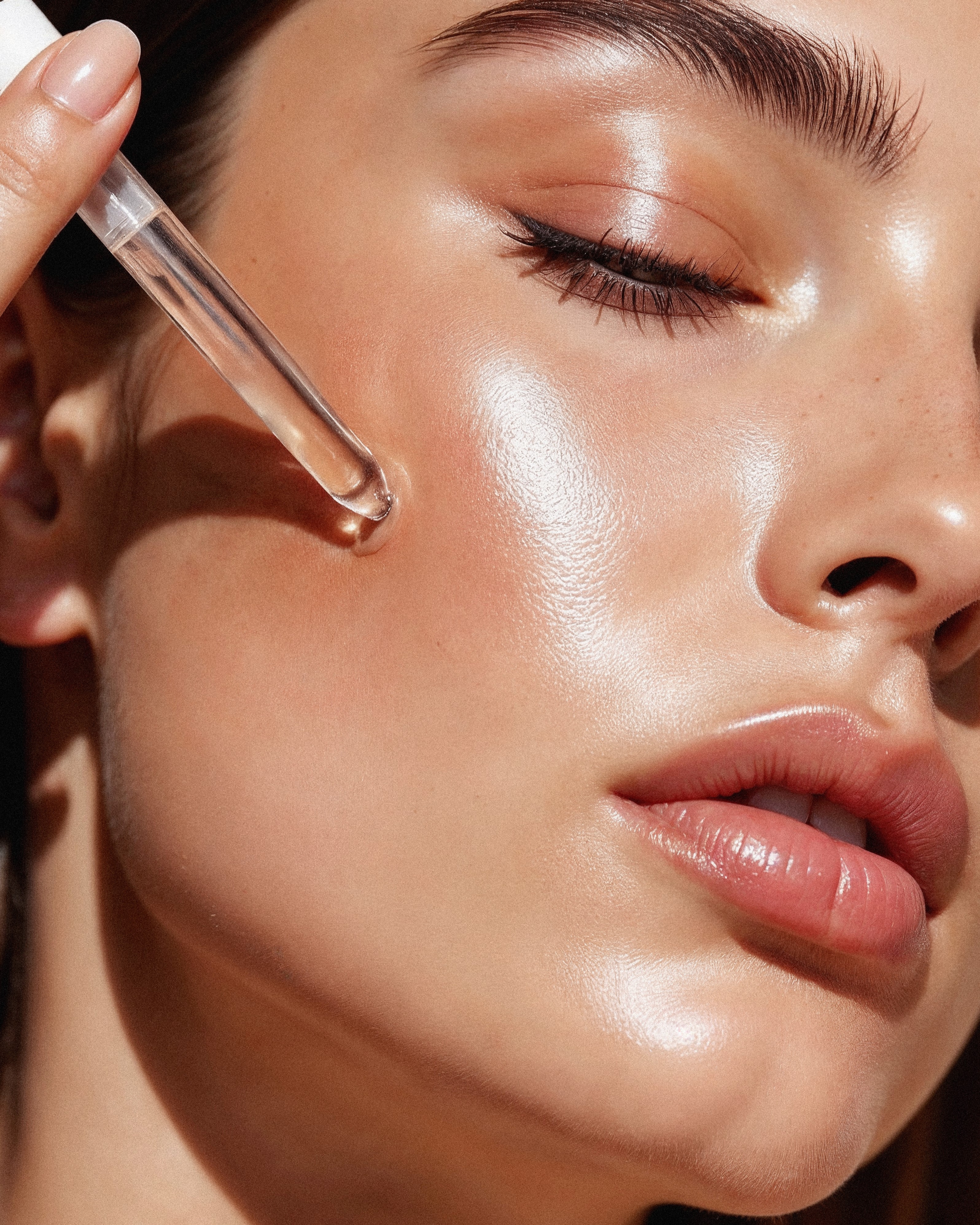
Hydration and moisture get used interchangeably, but they solve different problems. Hydration is about water content in the skin; moisture is about sealing that water in with oils and emollients. Skin can be oily and dehydrated at the same time — which is exactly why "hydrating" the wrong way, with heavy creams alone, doesn't fix a water problem.
Dehydrated vs dry — these are not the same thing
Dry skin is a skin type — it produces less oil than average, and that's a relatively fixed characteristic. Dehydrated skin is a condition — a temporary lack of water that can affect oily, combination, or dry skin equally. This distinction matters because the fixes are different: dry skin needs richer, oil-based products long-term, while dehydration needs water-based hydration first, regardless of your underlying skin type.
It's entirely possible to have oily, breakout-prone skin that's also dehydrated — overwashing, harsh actives, or skipping hydrating steps because "my skin is already oily" is one of the most common ways this happens. The oil production doesn't decrease just because the skin needs water; if anything, dehydrated skin sometimes overproduces oil to compensate, which is why the two get confused so often.
What dehydrated skin actually looks like
Fine lines that seem to appear and disappear through the day, a tight feeling after cleansing, and skin that looks dull rather than dry to the touch are the usual signs of dehydration rather than dryness. It's a water issue, not an oil issue, and the fix is a hydrating toner or essence, not a heavier moisturiser.
Humectants, emollients, and occlusives — what each one is for
- Humectants (glycerin, hyaluronic acid, centella extract) pull water into the skin from the surrounding air and deeper layers. These are your actual hydration ingredients — the ones doing the water-content job.
- Emollients (fatty acids, squalane) fill in the gaps between skin cells, making the surface feel smoother and softer. They support the barrier but aren't primarily about water content.
- Occlusives (petrolatum, heavier plant oils, beeswax) sit on top of skin and physically block water from evaporating out. They're the sealing step, not the hydrating one.
A routine that skips humectants and goes straight to a heavy occlusive moisturiser is sealing in whatever water was already there — which, if your skin is genuinely dehydrated, isn't much. This is the single most common reason a "very moisturising" cream doesn't actually fix a tight, dull complexion.
What to actually use, and in what order
Toners and essences built around humectants do the hydration job first. A moisturiser afterward — ideally one with both emollient and occlusive properties — locks that water in. Skipping the humectant step and going straight to a heavy cream means you're sealing in surface moisture, not adding new hydration underneath it.
Pat, don't rub, when applying a hydrating toner, and apply it to slightly damp skin — humectants work by drawing in nearby moisture, so a barely-damp face gives them more to pull from than bone-dry skin does. In very dry climates or heated indoor air, a humectant can occasionally pull moisture from deeper skin layers rather than the environment if there's nothing around to draw from — sealing with an occlusive immediately afterward avoids this.
Does the season change any of this?
Yes, meaningfully. Heated indoor air in winter and air conditioning in summer both lower ambient humidity, which increases how much water evaporates from skin regardless of the actual outdoor weather. Most people need a slightly heavier occlusive step in winter, not because their skin type changed, but because the air stopped holding as much moisture for a humectant to draw from. Reassessing your moisturiser by season, rather than by a fixed routine, is a reasonable habit rather than an unnecessary complication.
If your skin feels tight and looks dull rather than visibly flaking, start with a hydrating toner before reaching for a heavier cream — the water-content problem needs a water-content fix first.
A simple way to check which one you actually have
Cleanse and wait twenty minutes without applying anything. Dry skin will feel rough or flaky in specific areas, fairly consistently, regardless of the day. Dehydrated skin will feel tight and look dull everywhere, but the severity will vary noticeably day to day depending on sleep, weather, and how much water you've had — that variability is the tell. Skin type doesn't fluctuate week to week; hydration levels do.
Ingredients that make dehydration worse without you noticing
Alcohol-based toners marketed for "shine control," over-exfoliation with acids more than a few times a week, and hot water during cleansing all strip surface lipids faster than skin can replace them, which increases water loss even if none of those steps directly touch hydration. This is why oily or acne-prone skin — the group most likely to reach for stripping products — is also disproportionately likely to end up dehydrated: the routine built to control oil is quietly working against water retention at the same time.
If you're using an acid exfoliant a few nights a week and also feel tight and dull the mornings after, that's not a coincidence to ignore — it's worth adding a humectant step specifically on those days rather than assuming your skin type has simply changed.